Nostalgia is a wonderful feeling! From the book you used to read before bedtime to the sights and smells from your childhood bringing back fond memories!
Retro throwbacks are an aesthetic many people actively look for, whether it's a callback to the good old days or wanting to experience a decade they were born too late for. That’s why we have decided to go through a journey of the most popular wallpaper styles between the ages, from the 50s until today, and provide some inspiration from the Peel & Paper catalogue.
1950s-1960s
The 50s & 60s was a time of post world-war optimism and the birth of mid-century modern design trends. From floral and nature themed designs like leaves & ferns, to abstract geometry designs inspired by what we call pop-art today, these designs also embrace pastel colour palettes such as Mint Green and Blush Pink.
Our collection highlights these vivid 1950s-1960s designs, including our Priscilla Design, our Peyton Design and our Daniella Design with their floral and nature themes.
1970s
At the turning point of the 1970s, design trends started to transition into more block-like styles. Using specific shapes as a way to consistently create a pattern across a wall, such as a Rhombus, Oval or Arch, geometric inspiration became the norm.
Combining geometric patterns with the same themes of natural and bold abstract designs, these trends, much like the rest of the 1970s, were made during a time of experimentation. The experiment was a success and these designs are still popular today! Designs such as our Ariel Design, Tora Design and our Christine Design capture that 1970s feel!
1980s
What is known as “The Neon Eighties,” this decade embraced vividness and bold colours, something which people of the decade hold in the highest regard despite the clear differences compared to designs of today. The 1980s had such an iconic look!
Interior design trends however only slightly changed from the 70s, with distinctive art from the 80s emerging as a modern day “retro” or “throwback” design. Back in the 80s, wallpaper design trends remained virtually unchanged from the 70s, other than some slight changes in complex geometric patterns. Our designs such as Seraphina and Vivienne are most notable in our catalogue.
1990s
Reverting back to themes of flowers and nature, the design trends in the 90s essentially enhanced on what the 50s and 60s left behind. These designs provided a chic and whimsical element mixed with soft pastel colours and bold graphic prints of floral and geometric patterns.
Vivid, floral based designs from our catalogue such as Derora, Daphne and Kimberley can help fit a retro 90s style set up.
2000s
With the rise of the internet and enhancements in technology, the Noughties produced design trends involving Y2K and Frutiger Aero (optimistic, tech-infused digital gloss) within a home interior. For many, entering the 2000s was essentially like “living in the future” as the 2000s was a common way for people growing up and living in previous decades to reference what the future would be like. This distinctive 2000s futuristic style itself became a retro look in today’s more minimalist world.
Our catalogue includes designs which heavily reference the adjective of “futuristic” such as Natalie Navy, Raya, and Rosamund.
Early 2010s
At the beginning of the 2010s, design trends shifted into the bold and the beautiful. If the 1990s was an enhancement of designs from the 50s-60s, then the early 2010s was an additional enhancement to the designs from the 90s. When it comes to mid-century modern inspired designs, a linear comparison of all of these trends shows the difference in how floral and abstract designs have evolved.
Bold designs on our catalogue such as Rosalie, Celestia, and Heather, with vivid and flashy colours combined with a solid botanical design.
Late 2010s-2020s
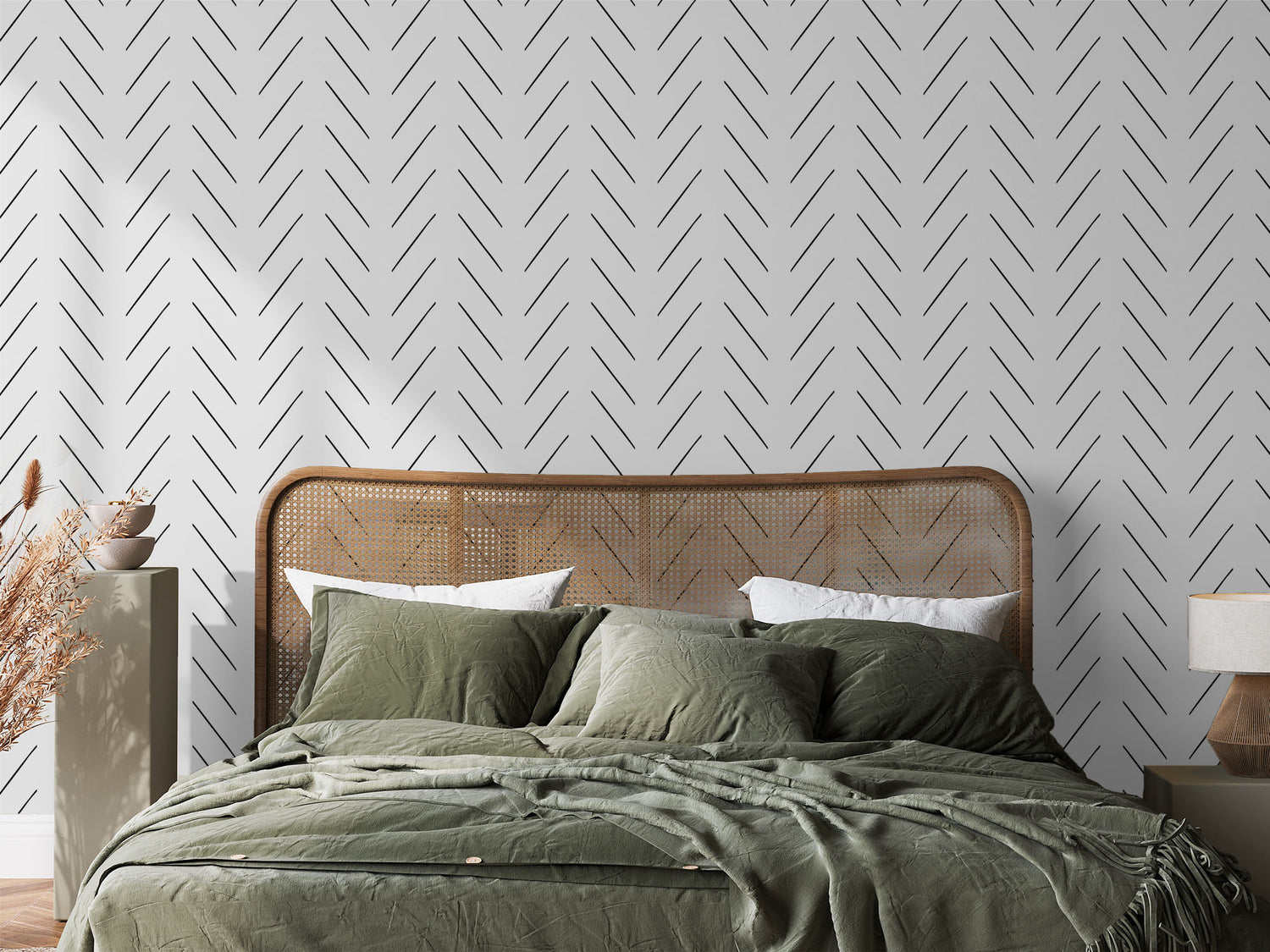
As the 2010s ended and the 2020s began, art trends once again shifted. Many people started to defect from bold, colourful graphic based designs, and preferred a more minimalist approach. Whilst the minimalist aesthetic originated in 20th century Eastern Europe, the aesthetic was considered to be more of a niche amongst inner circles of artists and designers. It was during this decade where this art style started to become more mainstream, being adapted into designs for the modern home and office. Whilst some are critical of it for being “boring”, many have embraced the aesthetic.
Minimalist is a term that means “someone who intentionally lives with only the things that serve a purpose in life.” With this term in mind, our catalogue contains many simple designs that provide a need rather than a striking art piece, such as our Sarla, Olive and the Lucinda designs.